Japan and China Nail Trends This Week
Japan and Chinese-language beauty media are pointing toward controlled contrast: translucent bases, concentrated reflection and coordinated variation.
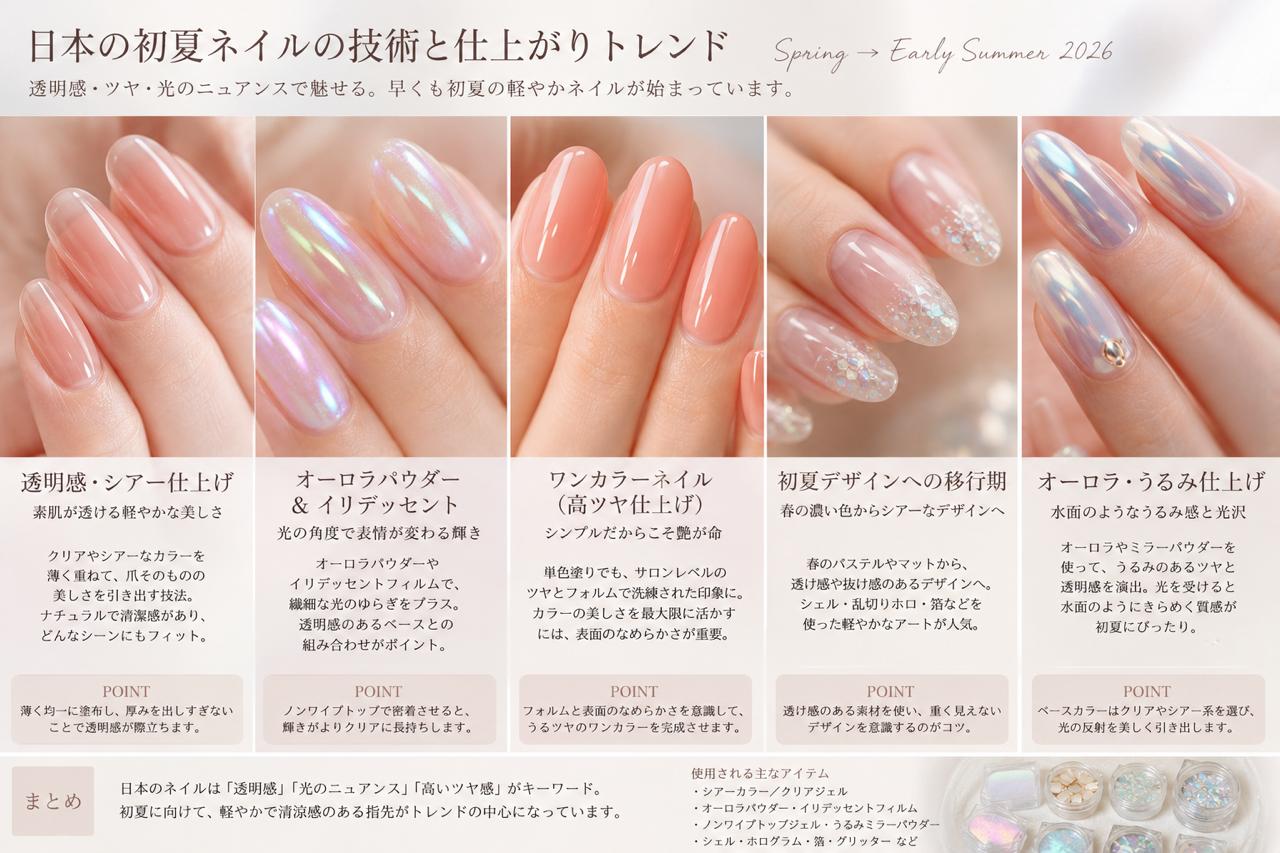
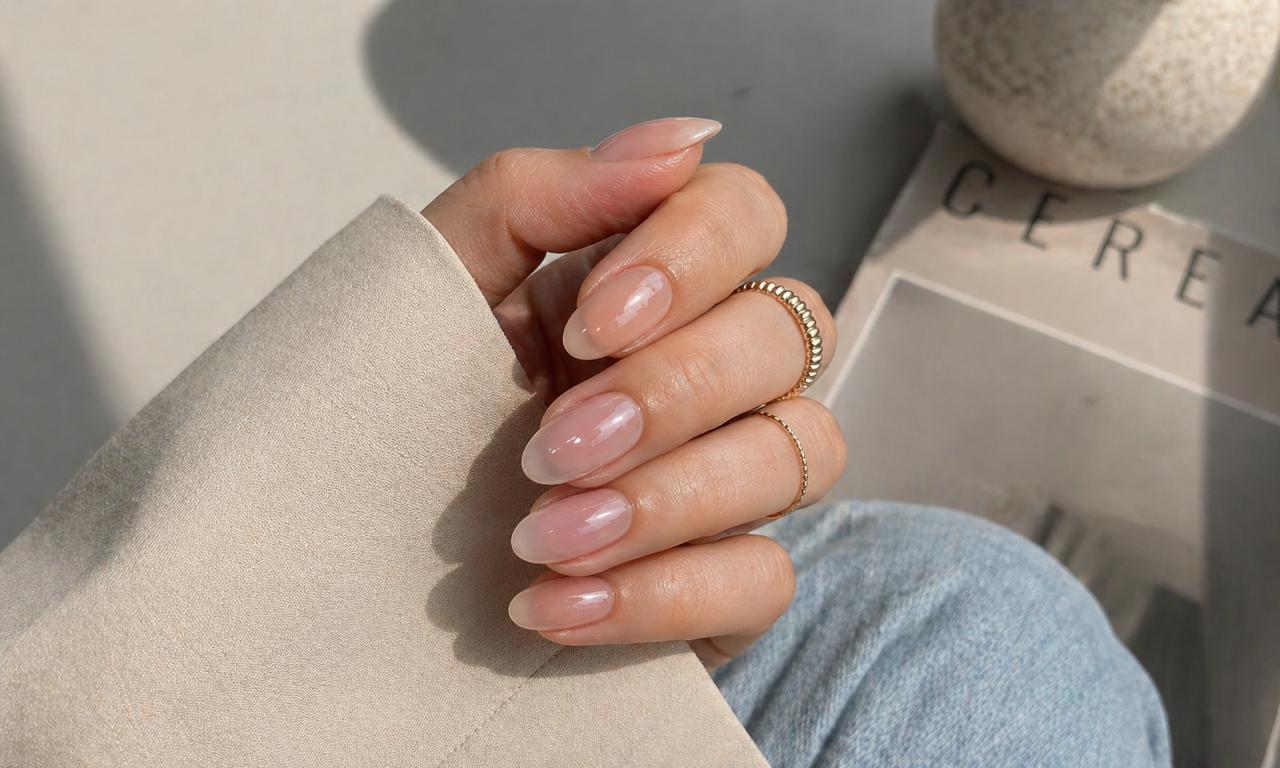
This week, the strongest nail direction in Japan and Chinese-language beauty media was not one single colour. It was controlled contrast: natural translucent bases combined with concentrated reflective detail. The trend matters technically because the result depends on accurate product placement. A weak base, uneven apex or thick cuticle area will remain visible beneath every transparent layer.
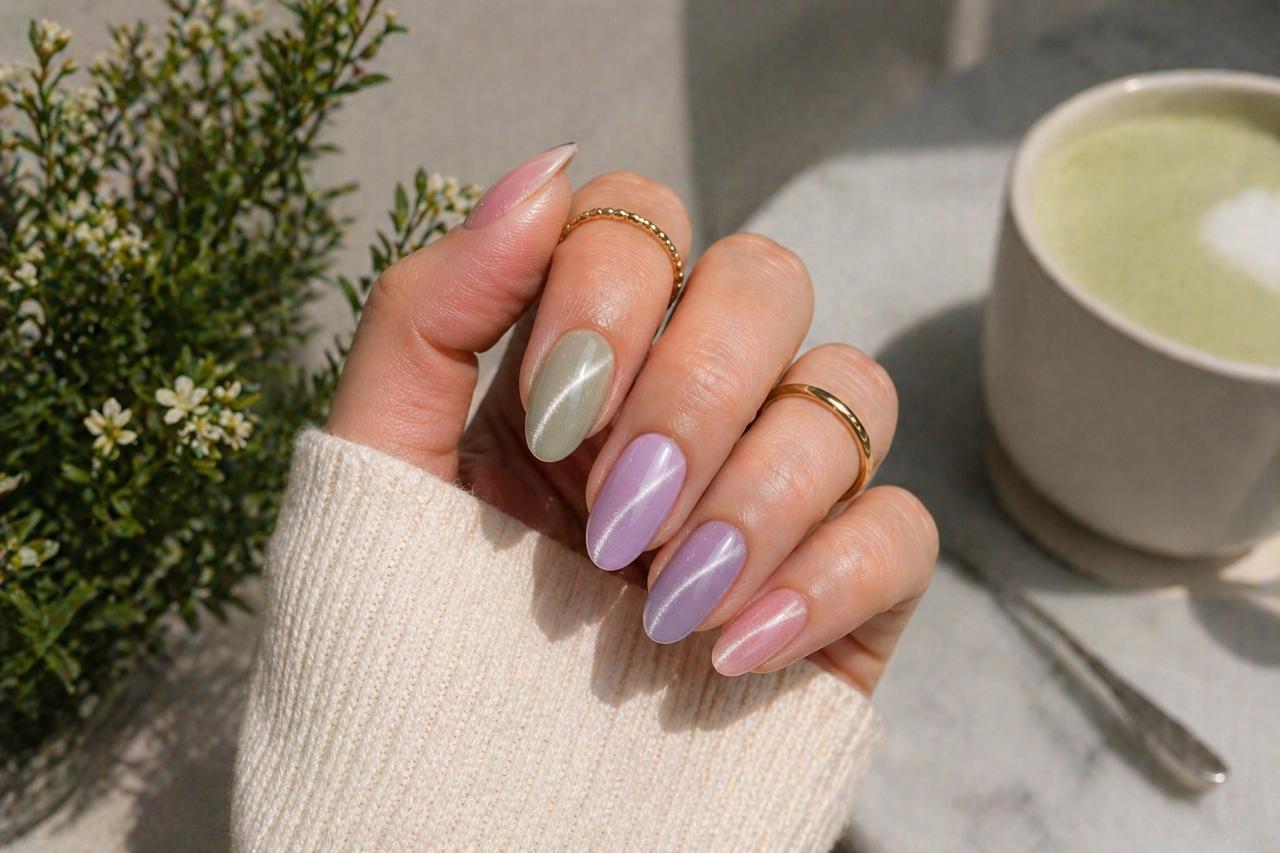
In Japan, Hot Pepper Beauty salon material published on 23 July showed blush-pink gradients combined with magnetic French tips. The base was natural and skin-compatible, while the reflective pigment remained concentrated at the free edge. The same platform also published ice-blue summer nails on 23 July, confirming the continued movement toward cooling blue tones and water-like light reflection. Earlier in the period, a Tokyo salon post dated 18 July grouped vivid summer colour with magnet gel, mirror powder, aurora, transparent finishes and short-nail options.
The product logic is precise. The pink gradient must be thin near the cuticle and slightly denser toward the centre. After curing, the magnetic French line should be constructed separately. The technician must move the particles before the gel begins to self-level too widely. A narrow reflected band gives definition. A dispersed band makes the tip appear cloudy and uncontrolled.
Japanese shape direction remains practical: short oval, soft square and moderate almond. Longer shapes support magnetic gradients, but the structure must remain balanced. Excess thickness at the free edge will distort the light line.
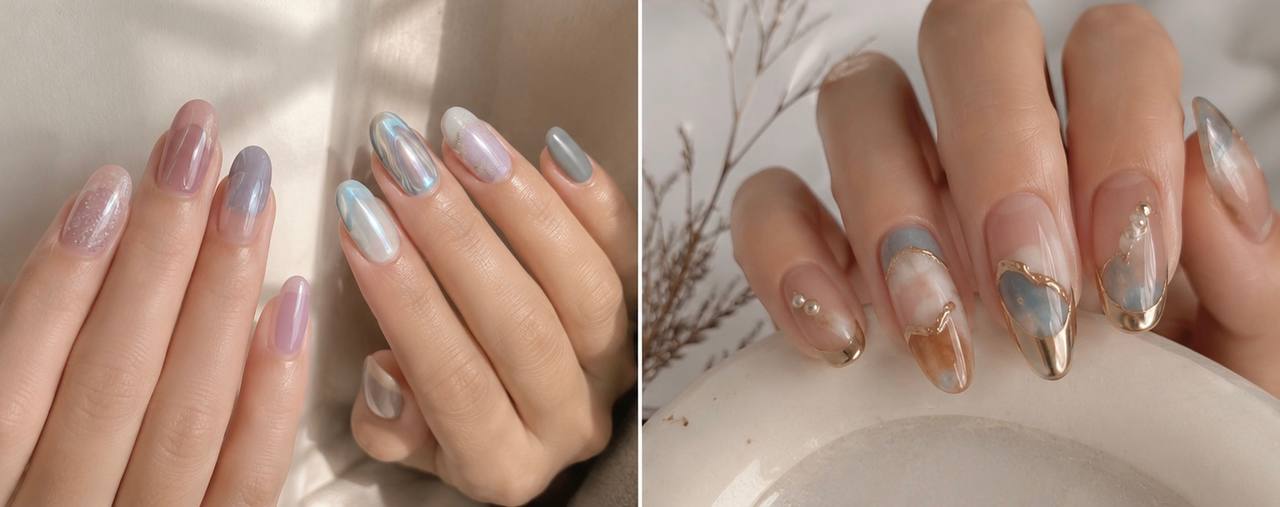
For China, the clearest accessible Chinese-language report inside the period was published by SKM Media on 22 July. It identified “mismatched nails,” also called AB nails, as a rising 2026 trend across Japan, Korea and social platforms. The system uses two coordinated colours or designs rather than repeating one identical manicure across both hands.
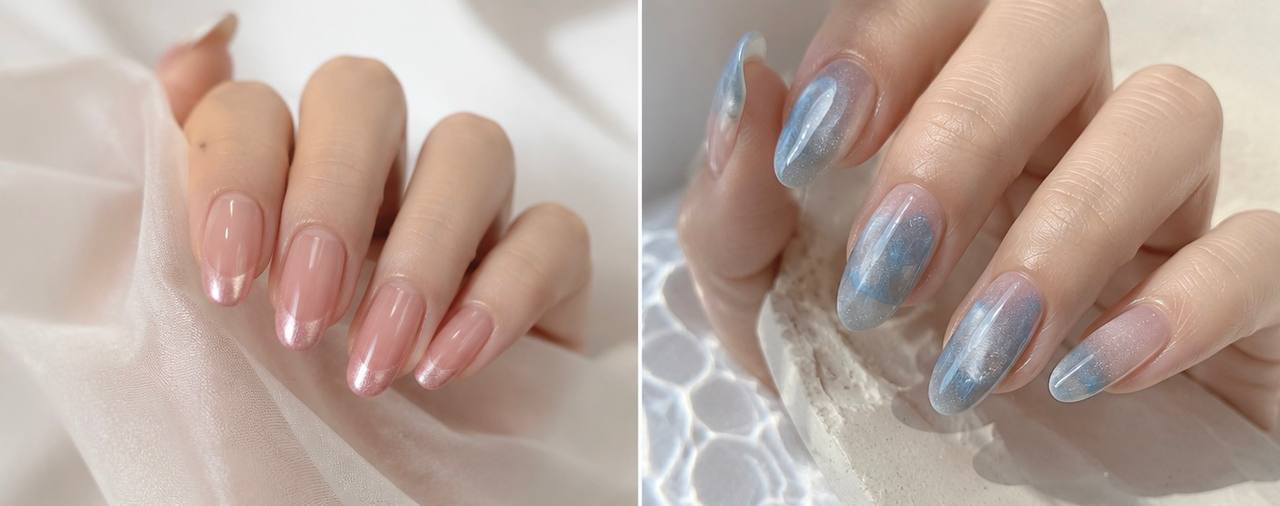
This method looks flexible, but the colour relationship must be controlled. Two designs should share one technical element: the same transparency, chrome temperature, line weight or finish. For example, one hand may use icy blue cat-eye gel and the other translucent pink, but both require similar gloss and particle density. Without this link, the manicure looks accidental.
The common errors this week are excessive opacity, uncontrolled magnet movement, incompatible colours and too many decorative systems together. Repeatability comes from limiting the design vocabulary: one base structure, one reflective technique and one clear contrast.
The trend in both markets is therefore organised variation. The colour may change, but the surface quality must remain consistent.