America's manicure mood changed noticeably this week. Warm coffee neutrals and short polished nails are becoming quieter, while vineyard colours, metallic surfaces and highly individual nail art are moving confidently in the opposite direction.
September has produced an interesting contradiction. The American manicure is becoming simultaneously more natural and more expressive.
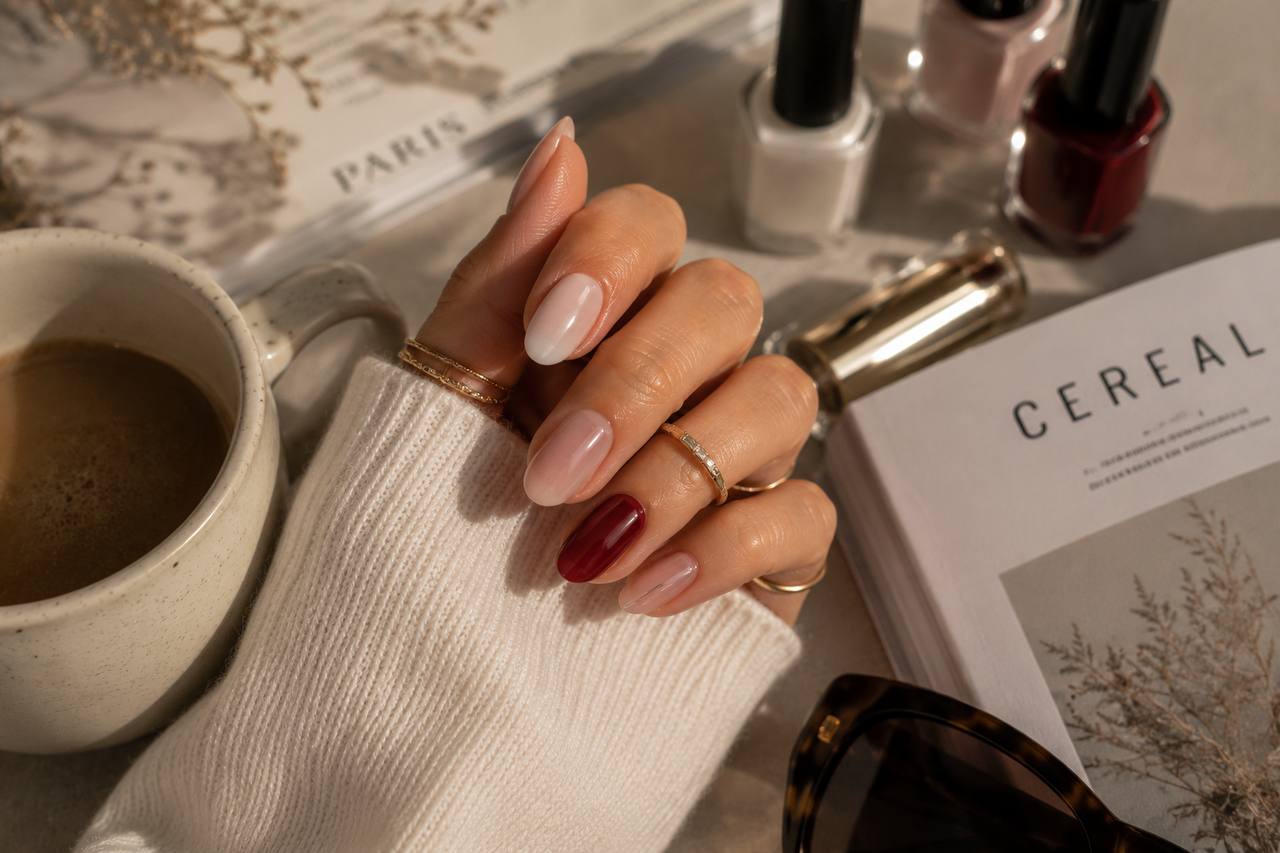
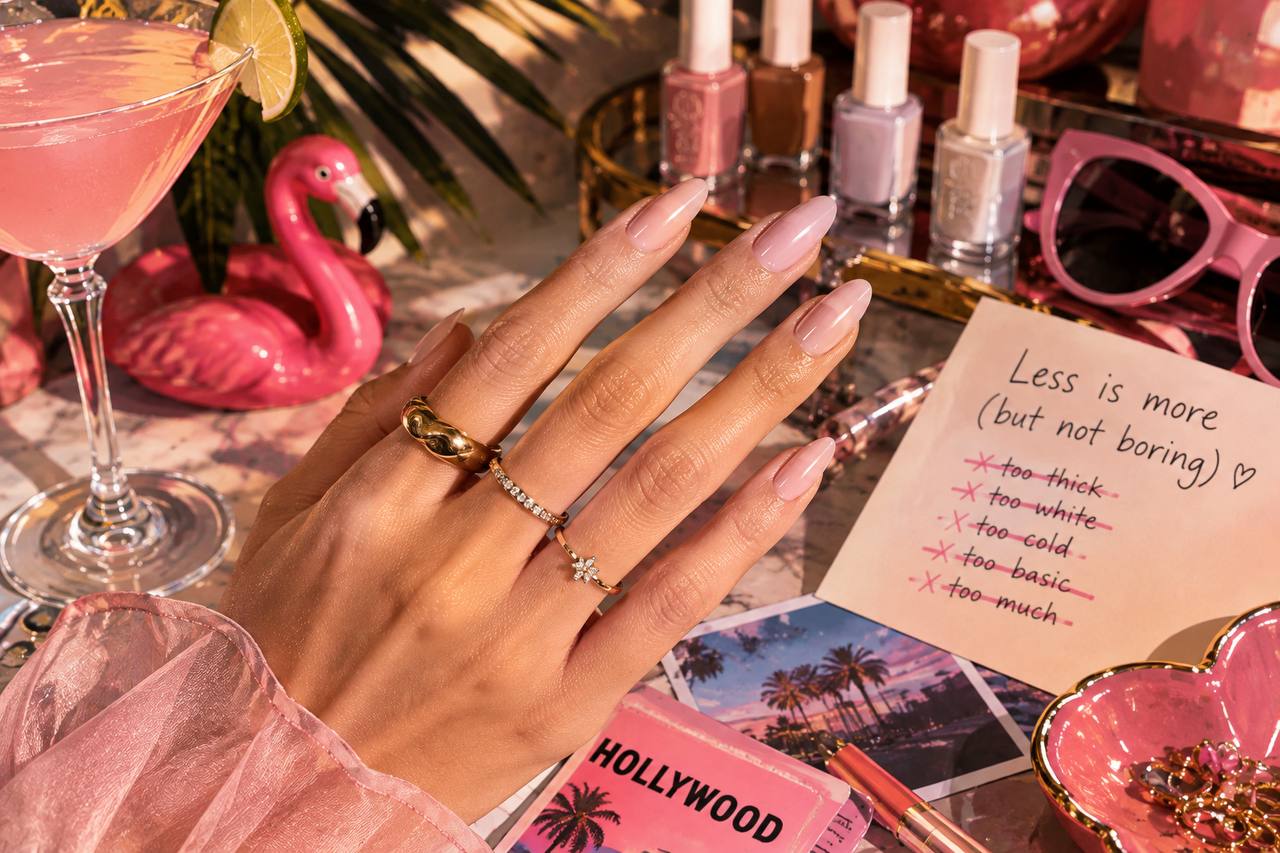
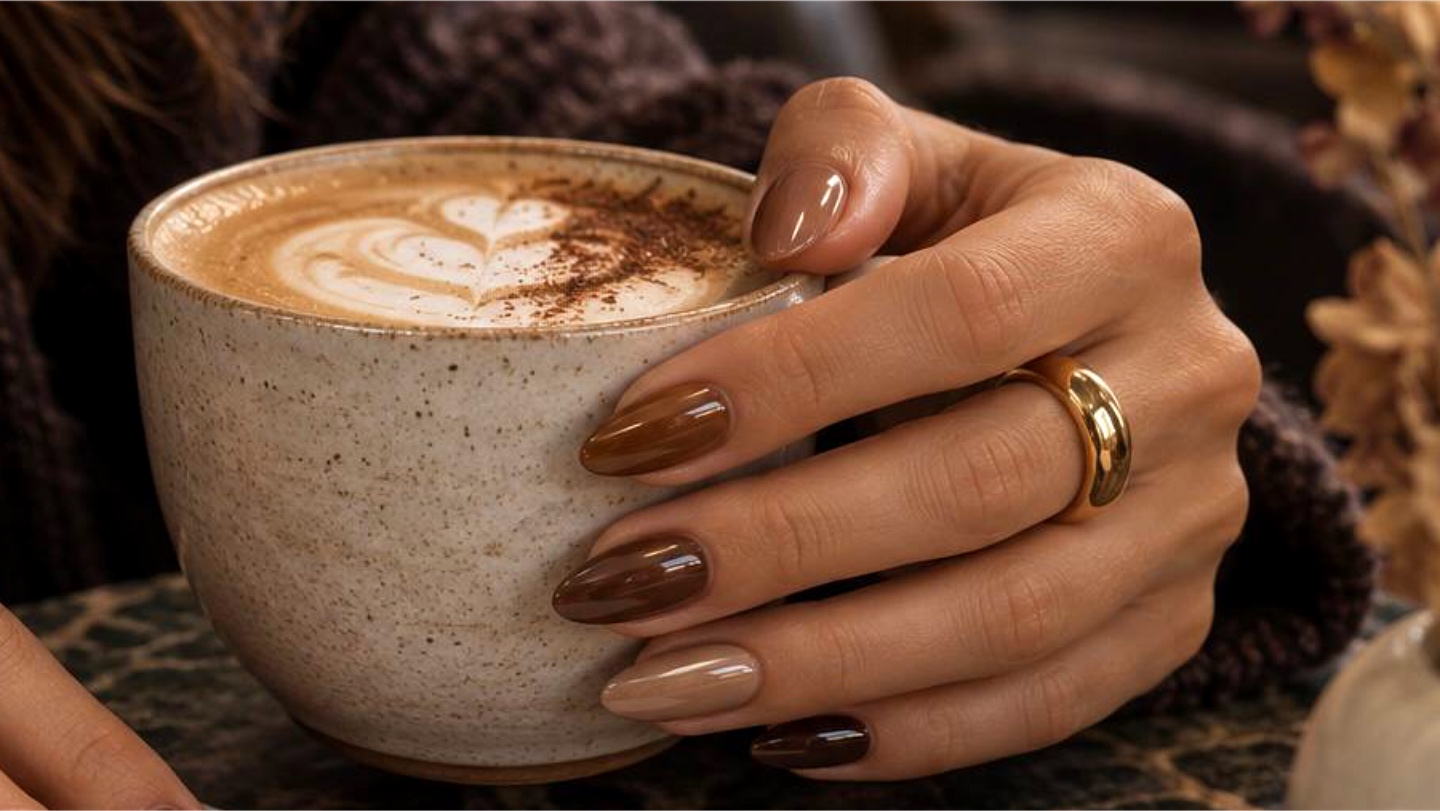
On the restrained side, creamy coffee colour is replacing summer's translucent pink. Latte nails move through milky beige, caramel, taupe and mocha, with a particularly glossy finish and shorter, natural shapes. The important technical distinction is warmth: this is not simply another nude manicure. The beige now carries enough brown, honey or caramel to register as autumn while remaining close to the skin.
Chocolate is the richer extension of that idea. New American coverage this week ranged from milk chocolate through cocoa to almost-espresso brown, confirming brown's unusual position as both a seasonal colour and a neutral. It can therefore tolerate more variation than burgundy: solid gloss, French tips, gradients and subtle decoration can all remain sophisticated.
Autumn's new neutral is not nude. It is something warm enough to taste.
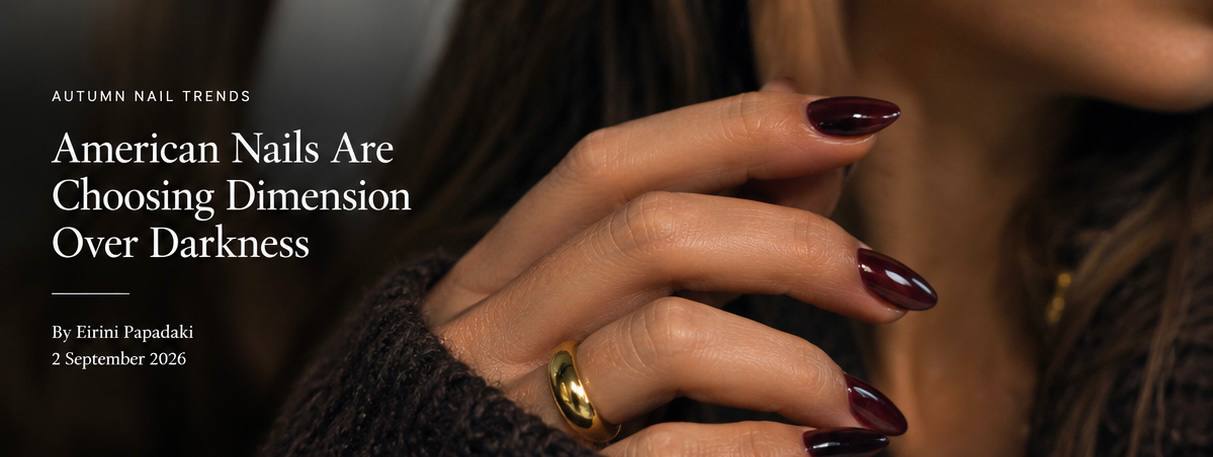
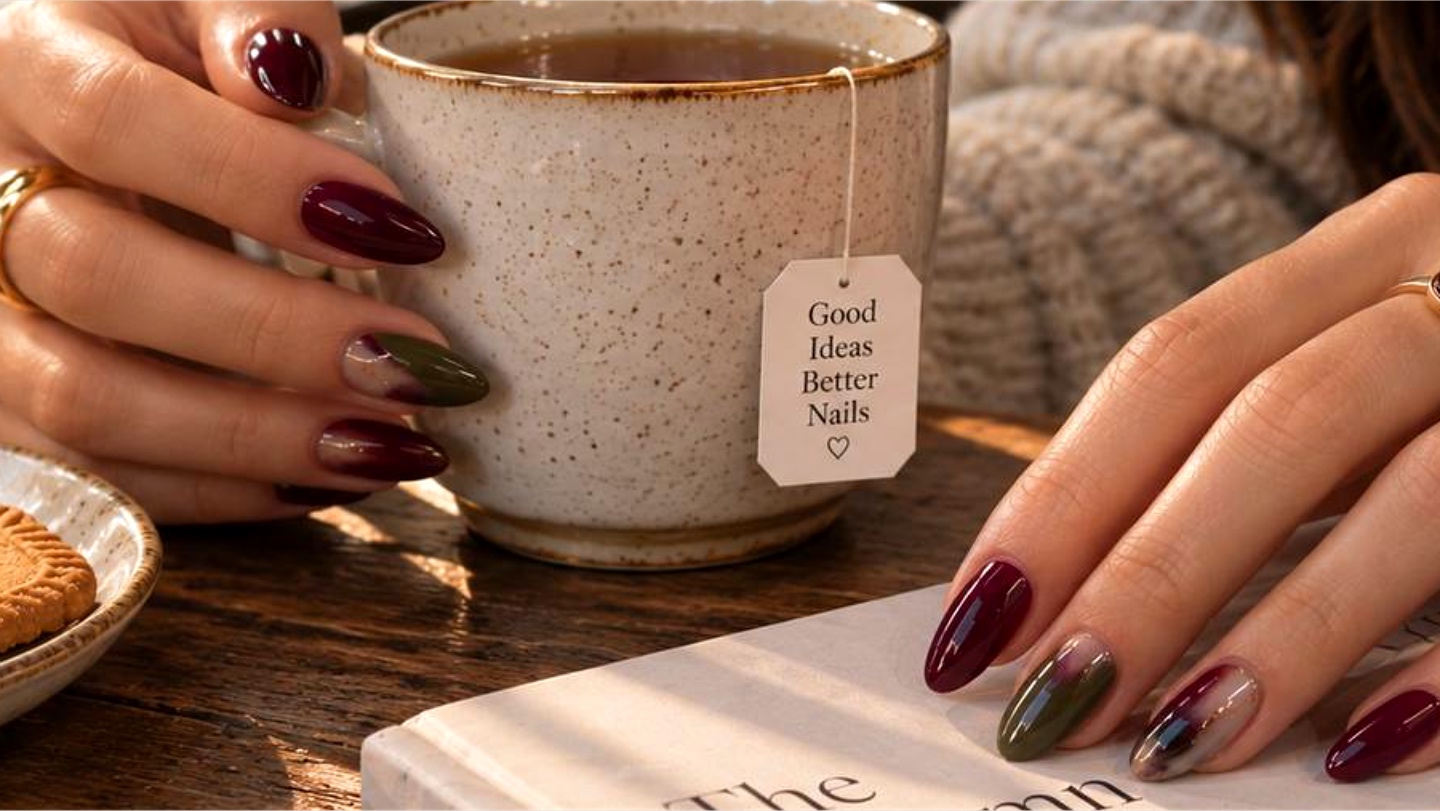
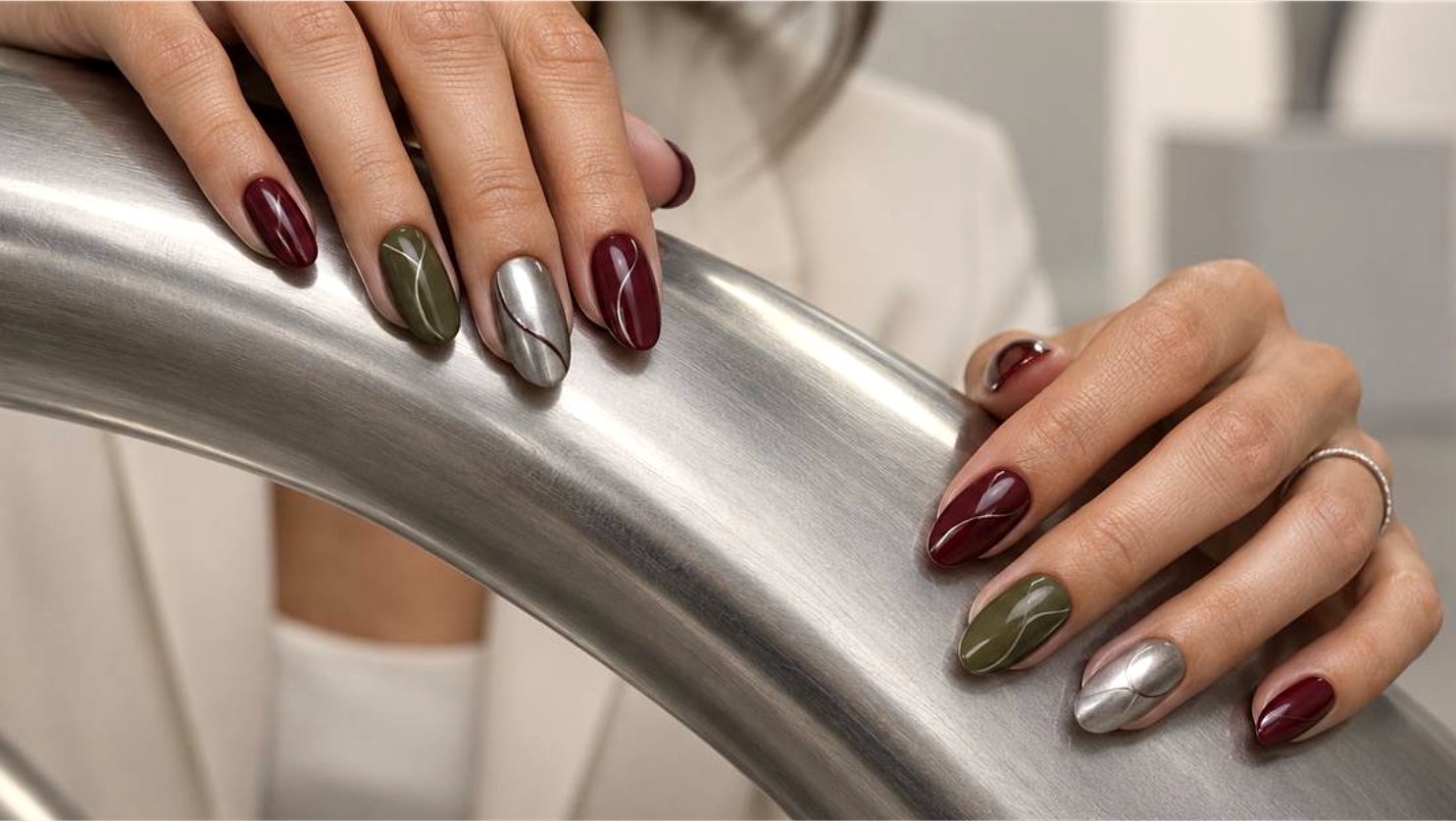
But the opposite movement is considerably more interesting. Cosmopolitan identified olive green with burgundy or plum as the emerging vineyard combination. This deliberately rejects years of nearly invisible clean-girl manicures. The colours can appear as dots, aura gradients, French work, stripes, marble or magnetic velvet rather than simply alternating solid nails.
For technicians, the combination works because the colours should not compete equally. Let burgundy provide richness and olive provide the unexpected contrast, or reverse the relationship on only one or two nails. With two already distinctive colours, excessive decoration can quickly destroy the sophistication.
Metallics are also becoming less decorative and more structural. September reporting places silver as a complete manicure, magnetic velvet finish or controlled accent over sheer bases rather than merely a chrome powder added at the end. Sapphire, dusty plum, black cherry, Earl Grey grey and earthy olive are appearing beside it.
The finish is increasingly responsible for making a dark colour feel alive.
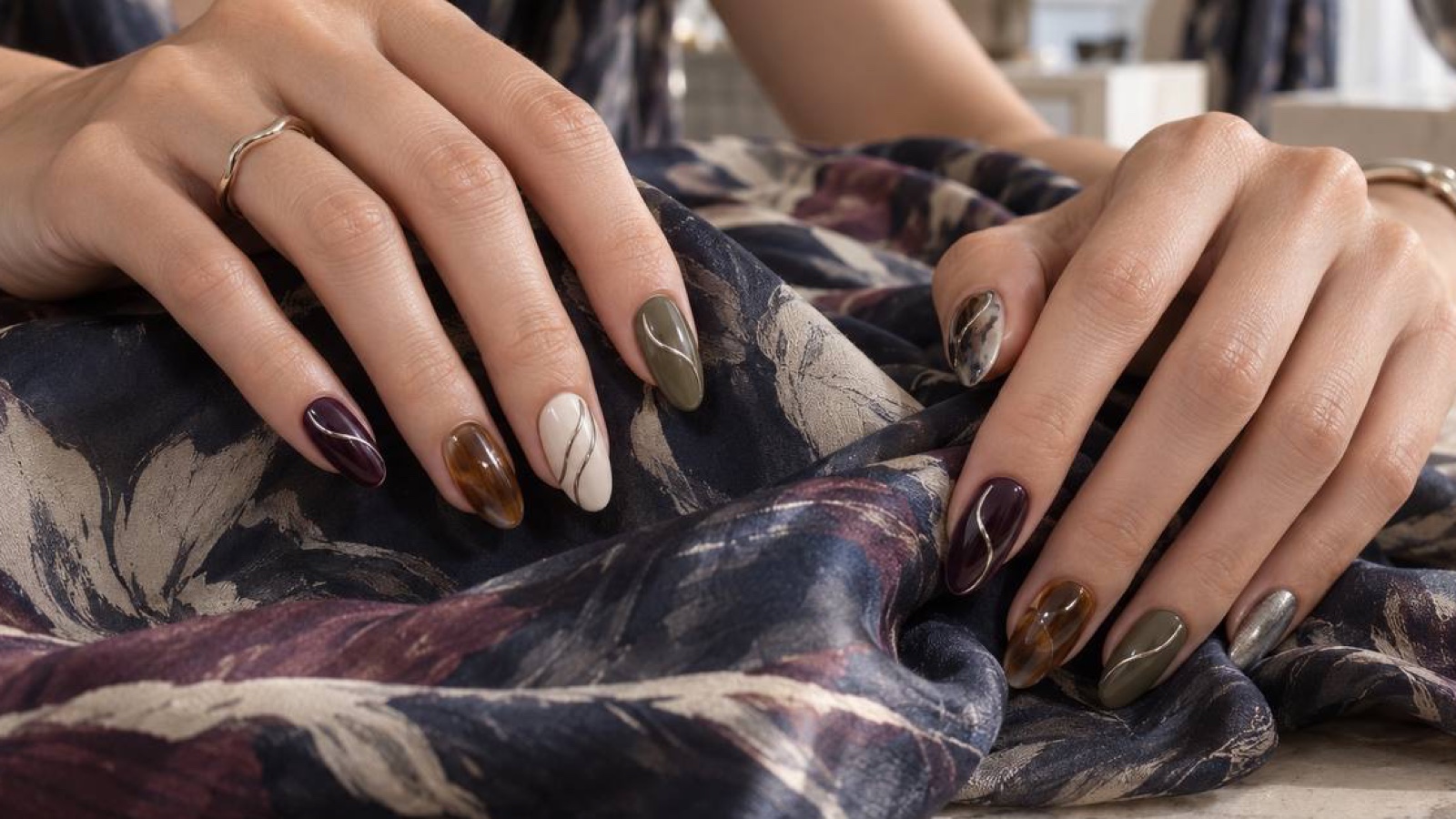
This explains why syrup and jelly techniques are surviving the seasonal change. New fall reporting this week highlighted amber, caramel, forest green and deep purple syrup gels alongside fine shimmer, pearl, muted chrome and jewel-toned cat-eye effects. Instead of covering the nail with autumn colour, technicians can build it in transparent layers and allow reflected light to provide depth.
Even orange has matured. Harper's Bazaar's 8 September pumpkin cider shade is a golden rust rather than obvious pumpkin orange, and its character changes dramatically between cream, metallic, chrome and holographic finishes.
The most important nail-art development, however, may be omakase nails. Cosmopolitan visited Brooklyn artist Moe Kim for the made-to-order approach in which references from fashion, nature, objects or personal photographs become a unique set. Every nail may use a different colour, texture or technique, but the ten nails must still read as one composition.
The next luxury manicure may be one that cannot be ordered twice.
That is a meaningful shift for salons. Trend knowledge remains important, but interpretation becomes part of the service. A client can arrive with a photograph of a handbag, autumn leaves or a favourite dress rather than a screenshot of somebody else's manicure.
The skill is therefore not creating more decoration—it is knowing exactly how much difference a manicure can contain before it loses coherence.
Did You Know?
An omakase manicure does not mean ten unrelated designs. Artists describe colour relationships and repeated visual elements as the mechanism that makes different nails belong together.