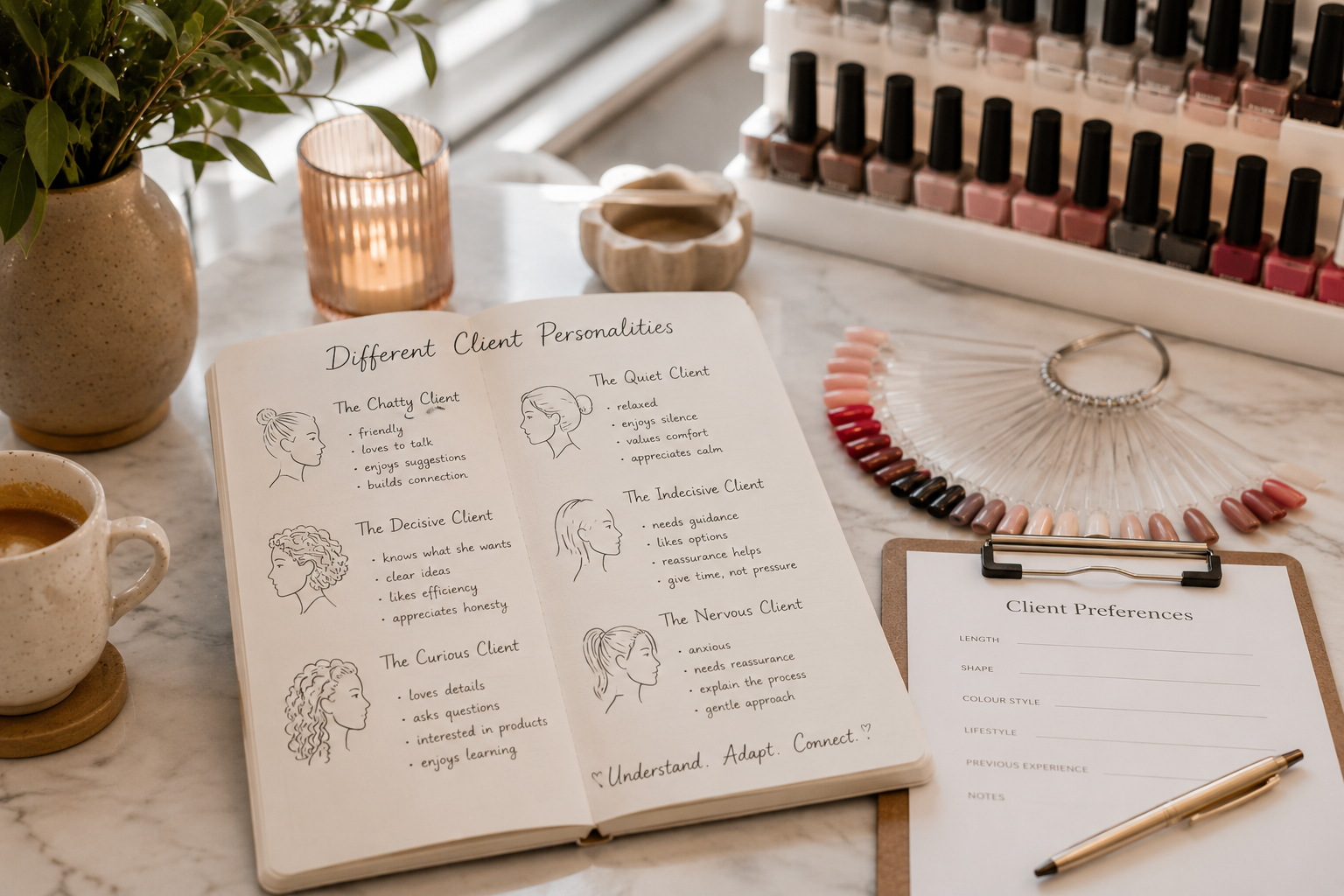
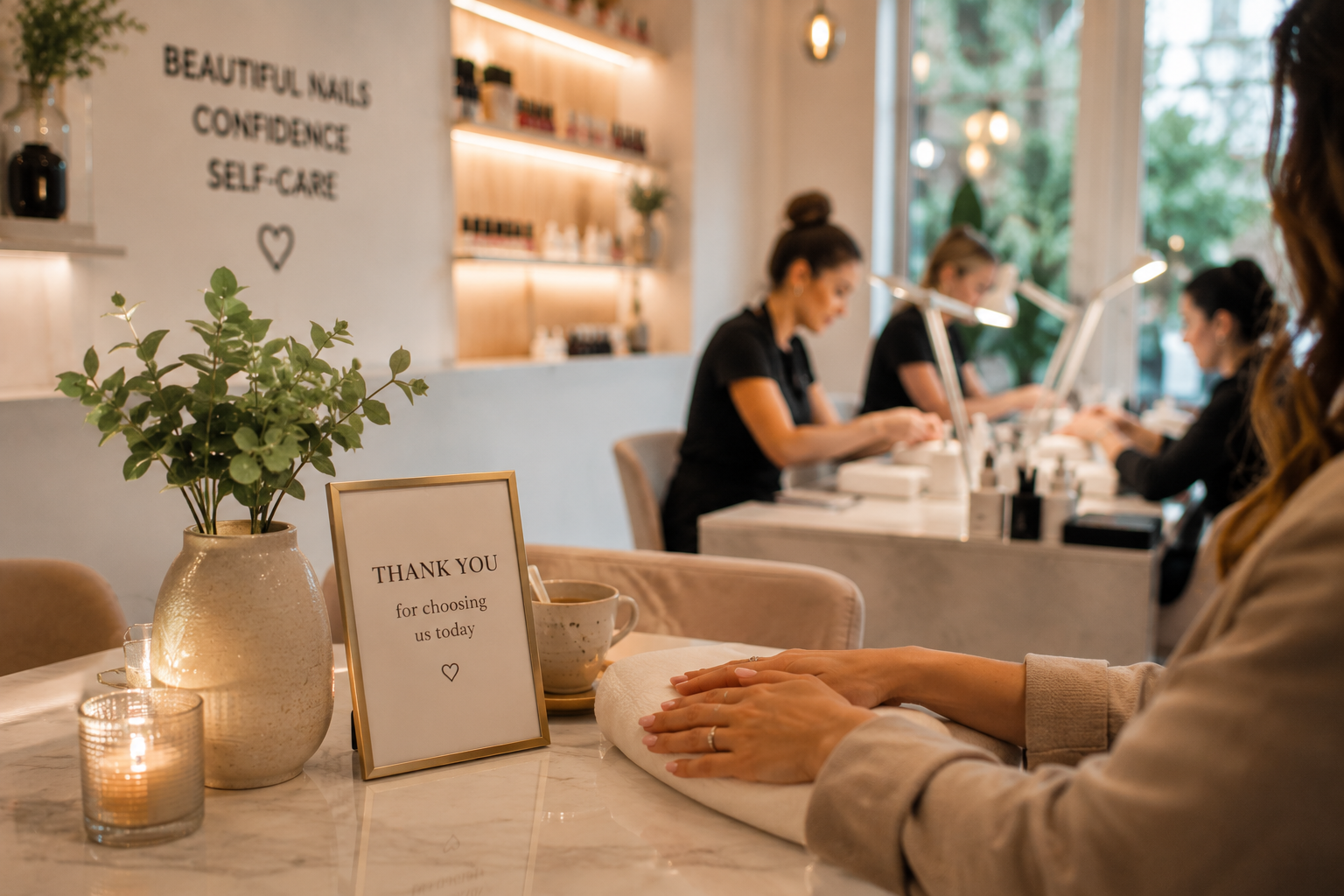
Walk into almost any salon and you will hear conversations everywhere. Some are full of laughter, others are quiet and relaxed. Conversation is an important part of the salon experience, but there is one skill that is even more valuable than speaking well: listening well.
Listening is what helps a technician understand what a client really wants. It builds trust, prevents misunderstandings, and creates a service that feels personal rather than routine. Clients do not simply want someone to hear their words. They want someone to understand what they mean.
"Clients don't remember how much you talked. They remember how well you listened."
The consultation is often where listening makes the biggest difference. A client may ask for long almond nails, but then mention she spends all day typing or works in healthcare. Another may show an inspiration photo but quietly admit she has never worn nails that long before. These details matter. They help you recommend something that fits her lifestyle instead of simply copying a picture.
Good listening also means allowing clients time to finish their thoughts. Interrupting, making assumptions, or rushing to offer solutions can leave people feeling ignored. Sometimes the most professional response is to pause, ask one more question, and make sure you have fully understood their expectations before beginning.
Listening extends beyond the manicure itself. Clients often share small pieces of their lives during an appointment. They may mention an upcoming wedding, a holiday, a new job, or a family celebration. Remembering these details at the next visit shows genuine interest and makes clients feel recognised as individuals rather than appointments in a diary.
"The strongest client relationships are built through understanding, not conversation."
There is another side to listening that many technicians overlook—listening to what is not being said. A client who becomes unusually quiet may simply be tired and looking for a peaceful appointment. Someone who hesitates when choosing a colour may be asking for reassurance without saying the words. Paying attention to body language, facial expressions, and tone of voice often tells you as much as the conversation itself.
One of the biggest misconceptions in customer service is that silence is uncomfortable. In reality, comfortable silence can be one of the greatest luxuries you offer. Many clients spend their day surrounded by noise, meetings, phones, and constant demands. For them, sitting quietly while receiving a professional manicure is exactly what they need.
Listening also improves your reputation. Clients are far more likely to recommend a technician who understands them than one who simply talks well. They remember leaving the salon feeling heard, respected, and confident that their preferences genuinely mattered.
"Listening turns a good appointment into a relationship built on trust."
At the heart of every successful salon is communication, but the best communication is never one-sided. Speaking with confidence is important, yet listening with genuine attention is what creates loyalty. When clients know they can express their ideas, concerns, and preferences without being rushed or interrupted, they feel comfortable returning again and again. Sometimes the most memorable thing you can say to a client is very little at all.
Ask Yourself...
During your appointments, who does most of the talking—you or your client? When someone explains what they want, do you listen carefully before offering advice, or are you already thinking about your answer? Clients rarely expect perfection, but they deeply appreciate feeling heard, and that simple difference is often what keeps them coming back.