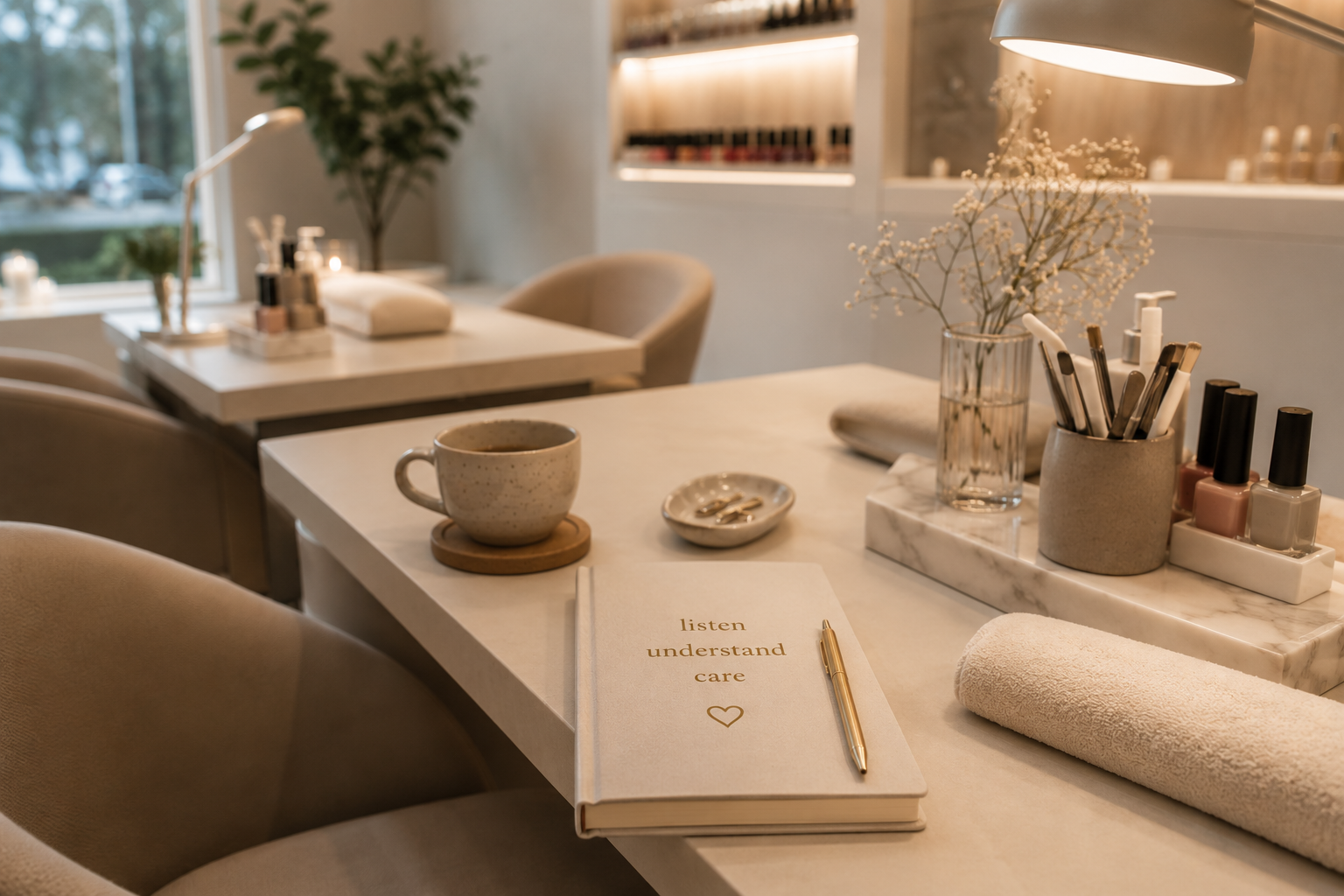
Every appointment begins before the first conversation. As your client walks through the door, she is already communicating with you. The way she smiles, carries herself, responds to your greeting, or even places her handbag on the chair can quietly reveal how she is feeling that day.
This does not mean you should become a psychologist or make assumptions about someone's personal life. It simply means paying attention. Clients appreciate technicians who notice when they need reassurance, conversation, or simply a little peace and quiet.
"The best technicians notice what clients don't always say."
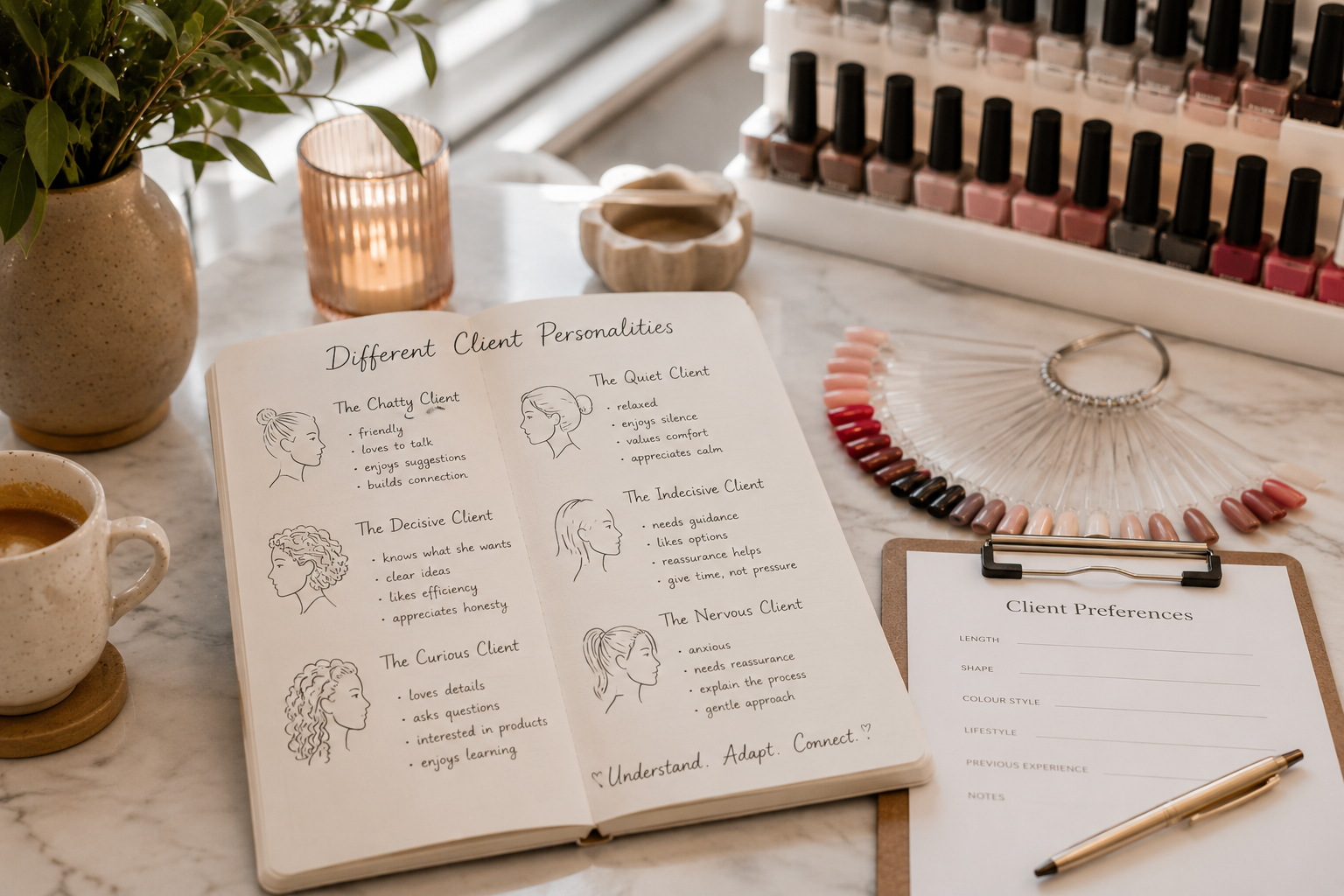
Some clients arrive full of energy. They are excited to talk, laugh, and tell you about their week. Others walk in looking tired after a long day at work. Some seem distracted, checking their phone or quietly staring into space. These moods are perfectly normal, and they often have nothing to do with the salon itself.
Rather than treating every appointment the same, allow the client to guide the atmosphere. If she enjoys chatting, join the conversation naturally. If her answers become shorter and she seems relaxed in the silence, do not feel the need to fill every quiet moment. Sometimes your greatest service is providing a calm environment where she can simply switch off.
Body language often tells a story before words do. A relaxed posture, open conversation, and regular eye contact usually suggest that a client feels comfortable. On the other hand, hesitation, crossed arms, nervous laughter, or constantly changing her mind may indicate uncertainty rather than dissatisfaction. Responding with patience instead of pressure helps clients feel safe and understood.
"Sometimes the kindest conversation is knowing when not to speak."
Mood also influences decision-making. A confident client may happily choose something bold and different, while someone feeling overwhelmed may prefer a familiar colour because it feels comfortable. Neither choice is better than the other. Your role is not to persuade clients into trends but to help them choose what feels right for them on that particular day.
There will also be moments when clients share personal news. It may be something joyful, such as an engagement or a new baby, or something more difficult, like stress at work or the loss of a loved one. You do not need to have all the answers. Often, simple kindness, genuine attention, and respectful listening are far more meaningful than trying to solve the problem.
It is equally important to remember that your own mood influences the appointment. Clients quickly notice whether a technician appears rushed, distracted, or impatient. Remaining calm, professional, and welcoming—even on busy days—helps create the reassuring atmosphere clients return for.
"A client's mood may change the conversation, but your professionalism should never change."
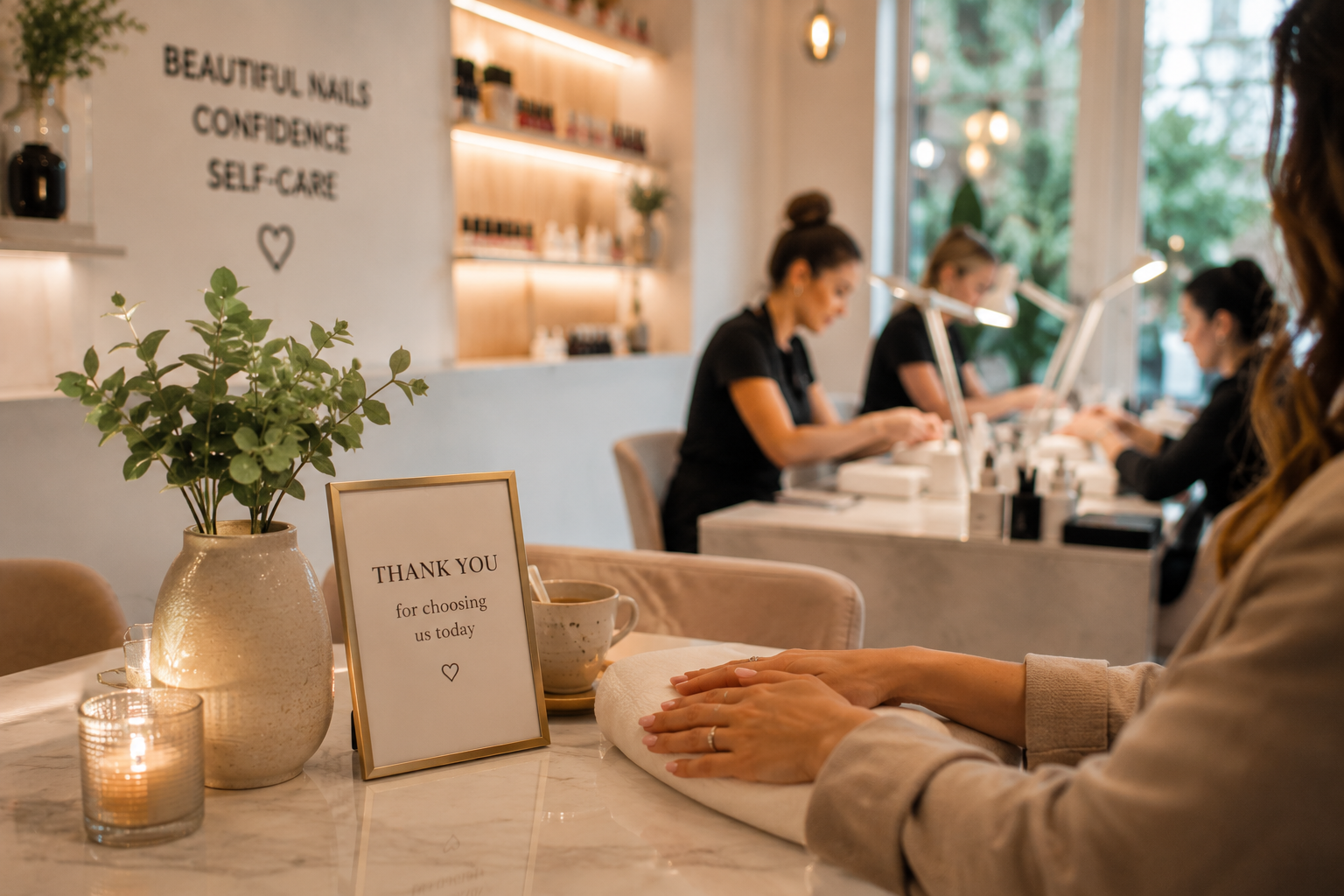
Reading your client's mood is not about analysing people. It is about being present. The technicians who build the strongest relationships are those who notice the little things, adapt naturally, and make every client feel comfortable without making the experience feel forced. When clients feel understood without having to explain themselves, they leave the salon feeling relaxed, respected, and eager to return.
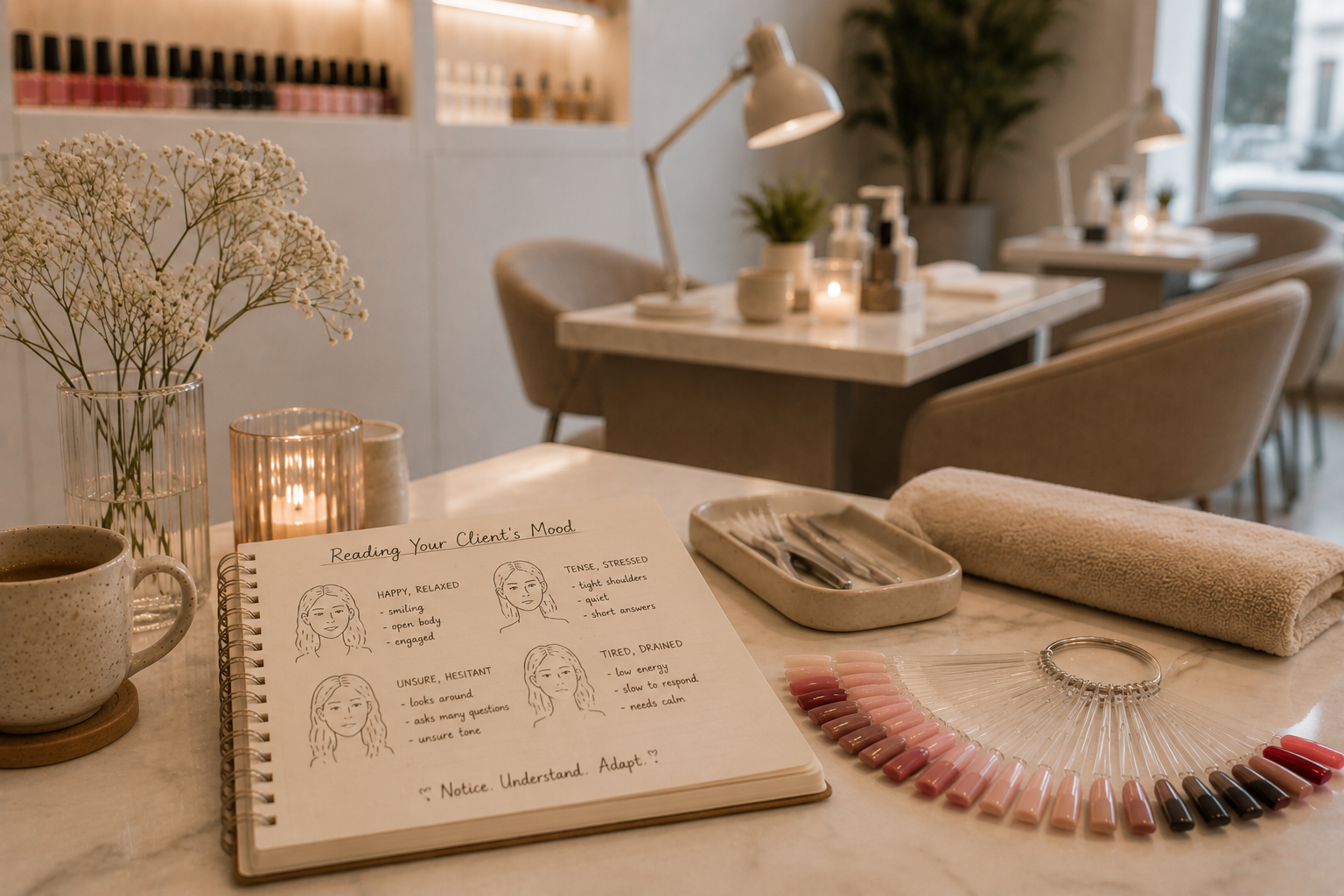
Did You Know?
Much of human communication happens without words. Facial expressions, body language, tone of voice, and even the pace of conversation often reveal how comfortable someone feels. In a salon, paying attention to these small signals allows you to adapt your service naturally, helping every client enjoy an experience that feels personal rather than routine.